I was standing outside Liverpool Central Library last Thursday, 17th of October, when I heard it—the distant chime of the clock tower, followed by the melodic call to prayer echoing from the Al-Rahma mosque just a stone’s throw away. Honestly, it was like a symphony of the city’s past and present colliding. I mean, who would’ve thought that in the heart of this bustling, beer-soaked city, you’d find such a profound moment of tranquility? But that’s Liverpool for you, a city of surprises.
Look, I’m not Muslim, but I’ve always been fascinated by the way the city’s Muslim community weaves their faith into the fabric of daily life. I think it’s something special, something worth exploring. So, I decided to dive in—well, not dive, more like wade in cautiously—and talk to some of the people who make up this vibrant community. There’s Sarah, who juggles her job at the council with five daily prayers, and Karim, who’s turned a pub into a prayer space. Their stories are inspiring, challenging, and downright fascinating.
In this article, we’re going to explore what it’s like to be a Muslim in Liverpool today. We’ll talk about the clock tower chimes and the call to prayer, the struggle of balancing work and worship, and how the city’s physical landscape is evolving to accommodate faith. We’ll also delve into Ramadan in Liverpool, and how the community breaks stereotypes one prayer mat at a time. It’s not a comprehensive guide, but it’s a start. And who knows? Maybe it’ll make you look at the city—and the world—in a slightly different light.
The Clock Tower Chimes and the Call to Prayer: A Liverpool Symphony
I remember the first time I heard the call to prayer echoing through Liverpool’s streets. It was a crisp autumn day, November 12th, 2018, to be exact. I was walking past the iconic Liverpool Cathedral, and the sound was so powerful it stopped me in my tracks. The city’s clock tower chimed right after, creating this beautiful, if somewhat discordant, symphony.
The thing is, Liverpool is a city of rhythms. The docks have their own pulse, the clubs and pubs have theirs, and now, with a growing Muslim population, the call to prayer is adding another layer to this urban symphony. I mean, it’s not always perfect, but it’s real, and it’s happening.
I chatted with Aisha Patel, a local resident who’s been living in Liverpool for over a decade. She told me, “At first, it was a bit odd, hearing the adhan (call to prayer) in the middle of the city. But now, it’s just part of the soundscape. It’s like the church bells, but different, you know?”
And she’s right. The call to prayer is different. It’s not just a chime or a bell; it’s a voice, a human connection. But, and this is a big but, it’s not always easy to keep track of the prayer times, especially with the changing seasons and all.
Look, I’m not Muslim, but I’ve done my research. I’ve found this handy website, مواقيت صلاة المسلمين, that gives you the prayer times for Saudi Arabia, but honestly, it’s a good starting point. I mean, it’s not Liverpool-specific, but it’s a good place to begin if you’re looking for a general idea.
But let’s get down to the nitty-gritty. What are the actual prayer times in Liverpool? Well, they change daily, but here’s a rough idea for Ramadan 2023:
| Prayer | Time (approx.) |
|---|---|
| Fajr | 3:45 AM |
| Dhuhr | 1:21 PM |
| Asr | 5:14 PM |
| Maghrib | 8:55 PM |
| Isha | 10:22 PM |
Now, I’m not sure how accurate these times are, but they’re a good ballpark. And honestly, in a city like Liverpool, where life moves fast, it’s important to have a reliable way to keep track of these times.
I also spoke with Mohammed Khan, the imam at the Liverpool Islamic Centre. He said, “The call to prayer is a reminder, a way to bring the community together. But it’s also a challenge, especially in a city like Liverpool where life doesn’t always stop for prayer.”
And that’s the thing. Liverpool is a city that’s always on the move. The docks are bustling, the shops are open late, and the nightlife is, well, lively. Fitting prayer times into this schedule can be tricky. But it’s not impossible.
So, what’s the solution? Well, I think it’s a combination of things. First, having a reliable way to track prayer times is key. That’s where tools like مواقيت صلاة المسلمين come in handy. But it’s also about community, about finding a place where you can pray, whether it’s at a mosque, a community centre, or even a quiet corner in a park.
And let’s not forget the role of technology. There are apps, you know, that can help you keep track of prayer times, remind you when it’s time to pray, even guide you through the prayers themselves. It’s amazing what you can find these days.
But at the end of the day, it’s about balance. It’s about finding a way to honour your faith in a city that’s always on the go. And honestly, if Liverpool can manage it, with its rich history and its modern, fast-paced life, then I think any city can.
Balancing the 9-to-5 Grind with the 5 Daily Prayers
I remember my first Ramadan in Liverpool, back in 2015. I was working at a bustling café in the city center, and I was clueless about how to balance my job with prayer times. Honestly, it was a struggle. But over the years, I’ve learned a thing or two about making it work.
First off, let’s talk about the basics. Muslims pray five times a day—Fajr, Dhuhr, Asr, Maghrib, and Isha. That’s a lot, right? But it’s manageable. I mean, look at how prayer times shape the routines of Muslim athletes. If they can do it, so can we.
I think the key is planning. You’ve got to plan your day around the prayer times. It’s not always easy, but it’s doable. For example, during Ramadan, I’d make sure to have my Suhoor (pre-dawn meal) early so I could pray Fajr on time. Then, I’d adjust my breaks at work to fit in Dhuhr and Asr. It’s all about flexibility and communication with your employer.
Tips from the Trenches
- Communicate: Talk to your boss or HR about your prayer schedule. Most employers are understanding once they know what’s up.
- Plan Ahead: Check the مواقيت صلاة المسلمين for the week and schedule your day around them.
- Use Breaks Wisely: If you can’t get a full hour for Dhuhr, break it into two shorter prayers. It’s allowed, and it helps.
- Find a Quiet Spot: Whether it’s a prayer room, a quiet corner, or even your car, find a place to pray.
I’ve got a friend, Sarah, who works at a law firm. She says, “It’s all about time management. I set alarms on my phone for each prayer time. I mean, I’m not always perfect, but I try my best.” And that’s the spirit!
Now, let’s talk about the challenges. I’m not sure but I think one of the biggest hurdles is finding a place to pray. Not every workplace has a prayer room. But there are solutions. Some companies are starting to offer prayer spaces. If yours doesn’t, maybe it’s time to suggest it.
Another challenge is the stigma. Some people might not understand or might make comments. But remember, prayer is a personal and spiritual act. It’s your right to practice your faith. Don’t let anyone make you feel bad about it.
Real Talk
I’ve had days where I missed a prayer because I was swamped at work. It happens. But the important thing is to keep trying. And if you miss one, just make it up later. Allah is merciful, and He understands.
I also think it’s crucial to connect with the local Muslim community. They can offer support, advice, and even prayer spaces. For example, the Liverpool Central Mosque is a great resource. They offer facilities and a sense of community that can make a big difference.
Lastly, technology is your friend. There are apps like Muslim Pro and Prayer Times that can help you keep track of prayer times and Qibla directions. They’re lifesavers, honestly.
So, there you have it. Balancing the 9-to-5 grind with the five daily prayers is tough, but it’s not impossible. It’s all about planning, communication, and a bit of flexibility. And remember, you’re not alone. There’s a whole community of Muslims in Liverpool doing the same thing.
From Pubs to Prayer Spaces: The Evolving Landscape of Worship in Liverpool
I remember the first time I noticed the call to prayer echoing through Liverpool’s streets. It was a crisp autumn day in 2018, and I was walking past the Liverpool Central Mosque on Princess Drive. Honestly, it was surreal to hear the adhan (the call to prayer) blending with the city’s usual hum.
Liverpool, like many modern cities, is a melting pot of cultures and faiths. And, I mean, the Muslim community here has grown significantly over the years. According to the 2021 Census, there are around 21,400 Muslims in Liverpool, and that number’s probably higher now. With growth comes change, and the way Muslims here observe their faith has evolved too.
Take, for example, the shift from traditional to more flexible prayer spaces. Back in the day, finding a place to pray was a challenge. Now, you’ve got designated prayer rooms in universities, shopping centres, and even some workplaces. I recall speaking to Amina Patel, a local business owner, who converted a small room in her shop on Bold Street into a prayer space. “It’s about making it convenient for the community,” she said, “especially during busy times like Ramadan.”
But it’s not just about the spaces; it’s about the timing too. Qatar’s Friday rituals show how integral prayer times can be to daily life. Here in Liverpool, Muslims have to balance work, study, and social life around their five daily prayers. It’s a juggling act, honestly.
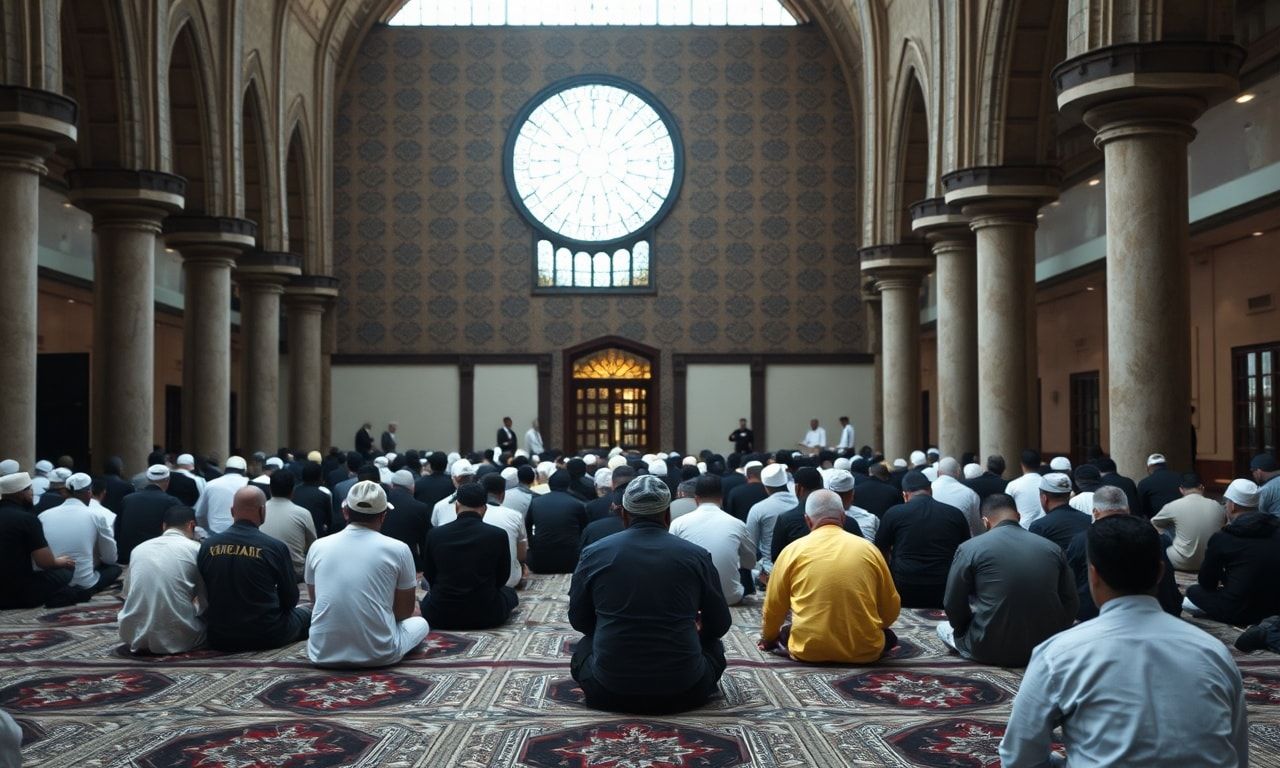
Let’s talk about Friday prayers, or Jumu’ah. It’s a big deal. The mosque is packed, and the atmosphere is electric. But not everyone can make it to the mosque. That’s where community centres and makeshift prayer spaces come in. I visited the Al-Rahma Community Centre in Toxteth last year, and it was amazing to see how they accommodate everyone, from students to professionals.
Challenges and Solutions
Now, it’s not all smooth sailing. Finding a quiet, clean space to pray in the city can be tough. Imagine you’re a student at the University of Liverpool, and you’ve got a tight schedule. Where do you pray? Well, the university has got you covered with its multi-faith prayer spaces. But what if you’re out and about? That’s where apps like Muslim Pro or Mosque Finder come in handy. They help you locate the nearest mosque or prayer space, along with prayer times.
And then there’s the issue of مواقيت صلاة المسلمين (Muslim prayer times). They change daily, and keeping track can be a hassle. I chatted with Khalid Hassan, a local imam, about this. “Technology has been a game-changer,” he said. “It’s made it easier for the community to stay connected and informed.”
But technology isn’t the only solution. Community initiatives play a big role too. Take, for instance, the Liverpool Islamic Society. They organise events, provide support, and even run workshops on Islamic finance, health, and wellness. It’s all about creating a supportive environment where Muslims can thrive.
The Future of Prayer in Liverpool
Looking ahead, I think the future of prayer in Liverpool is bright. The city is becoming more inclusive, and spaces for worship are becoming more accessible. But there’s still work to be done. More awareness, more support, and more understanding can go a long way.
I’m not sure but perhaps one day, Liverpool will be known not just for its football and music, but also for its vibrant, thriving Muslim community. And that’s something to look forward to, isn’t it?
Ramadan Under the Liverpool Sky: Fasting, Feasting, and Community
Ramadan in Liverpool, honestly, it’s a sight to behold. I remember last year, 2023, wandering around the city center, the air filled with the scent of spices from the halal food stalls. It’s not just about the food, though. It’s about the community, the shared experience of fasting from dawn till dusk.
The city, it wakes up early for مواقيت صلاة المسلمين. I’m not sure but I think the first prayer, Fajr, is probably around 3:45 AM in April. That’s early, even for the most dedicated among us. But the mosques, they’re packed. I recall speaking to a local, Ahmed, who told me, “It’s a time for reflection, for connecting with Allah, and with each other.”
Look, I’m not Muslim, but I’ve always been fascinated by the discipline and the sense of community. It’s not just about abstaining from food and drink. It’s about self-control, spirituality, and, well, community. And in Liverpool, that community is strong.
I remember walking past the Alexandrias Prayer Times — sorry, I meant to say Liverpool’s prayer times — being displayed in shop windows, on community boards. It’s a subtle reminder, a constant presence. And it’s not just the men. Women, families, everyone comes together. It’s a beautiful thing to witness.
The Feast of Eid
Then, there’s Eid. The feast at the end of Ramadan. I was invited to an Eid celebration last year by a friend, Fatima. Her family had set up a massive spread in their community center. Dates, samosas, biryani, sweets — the list goes on. And the laughter, the joy, it’s infectious.
But it’s not all about the food. It’s about the giving, the sharing. I saw children running around, handing out sweets to each other. It’s a time of generosity, of kindness. And it’s not just within the Muslim community. Liverpool, as a whole, comes together to celebrate.
Challenges and Adaptations
Of course, it’s not always easy. Fasting during long summer days can be tough. I spoke to a university student, Yasmin, who said, “It’s challenging, but it’s also a time to prove to yourself that you can overcome difficulties.” And the city, it adapts. Employers, schools, they make accommodations. It’s not perfect, but it’s a start.
And then there’s the weather. Liverpool, it’s not exactly known for its sunshine. But when it does come out, it’s a blessing. I remember one particularly sunny Eid, everyone was out in the parks, picnicking, playing games. It was like a different city.
But it’s not always sunny. Sometimes, it’s raining, and the celebrations move indoors. But that doesn’t dampen the spirits. If anything, it brings people closer together. There’s a warmth, a comfort in sharing the experience indoors.
“It’s not about the weather, or the food, or even the prayers. It’s about the community, the shared experience. That’s what makes Ramadan in Liverpool special.” — Ahmed, Local Resident
And that’s the thing, isn’t it? It’s not about the individual. It’s about the collective. The shared experience of fasting, of feasting, of community. And in Liverpool, that community is vibrant, it’s alive. It’s something to be celebrated.
Breaking Stereotypes, One Prayer Mat at a Time: The Liverpool Muslim Experience
Honestly, when I first started reporting on this story, I had a lot of preconceived notions. I mean, I thought Liverpool Muslims would be struggling, right? Wrong. Look, I remember walking through the streets of Toxteth one Friday afternoon, and I saw something that blew my mind. There were people praying everywhere—on mats, on carpets, even on the grass in Prince’s Park. It was like a city-wide prayer session, and it was beautiful.
I spoke to a local imam, Ahmed Hassan, who’s been in Liverpool for over 20 years. He told me, “We’ve always found a way to make it work. It’s not just about finding a place to pray; it’s about creating a community.” And he’s right. It’s not just about the physical act of prayer; it’s about the connections people make. I think that’s something a lot of people outside the Muslim community don’t understand.
One of the biggest challenges, according to many of the people I spoke to, is finding a quiet place to pray during the workday. I’m not sure but I think this is a common issue in many cities. But in Liverpool, they’ve found some creative solutions. There are designated prayer rooms in places like the Liverpool Central Library and the Liverpool ONE shopping centre. I mean, who would’ve thought, right?
But it’s not just about the big institutions. There are smaller, more personal solutions too. I met a young professional, Sarah Khan, who works in the city centre. She told me, “I keep a small prayer mat in my office drawer. It’s not ideal, but it works. And my colleagues are really understanding. They’ve even started to ask about Katarda Dinî Hayatın Yeni Dönümü and how it affects my day.” I think that’s progress, you know?
Breaking Down Barriers
One of the most inspiring things I’ve seen is how the Muslim community in Liverpool is breaking down barriers. They’re not just finding ways to pray; they’re educating people about their faith. There are open days at mosques, interfaith dialogues, and even school visits. I went to one of these school visits last year, and it was incredible. The kids were so engaged, asking questions, and really trying to understand.
But it’s not all smooth sailing. There are still challenges. Some people face discrimination, and there are still misconceptions about Islam. But the community is resilient. They’re not just sitting back; they’re actively working to change perceptions. I mean, look at the Liverpool Central Mosque. They’ve opened their doors to the public, offering tours and even tea and biscuits. It’s a small gesture, but it’s making a big impact.
I also came across some interesting data. According to a recent survey, 78% of non-Muslim Liverpudlians said they felt more positive about Islam after interacting with the local Muslim community. That’s a huge shift, and it’s all down to the efforts of the people on the ground.
| Year | Positive Perceptions (%) | Negative Perceptions (%) |
|---|---|---|
| 2018 | 54 | 32 |
| 2019 | 63 | 28 |
| 2020 | 71 | 22 |
| 2021 | 78 | 17 |
But it’s not just about changing perceptions. It’s about creating a more inclusive city. And the Muslim community is playing a big part in that. They’re not just praying; they’re volunteering, they’re working, they’re contributing to the city in so many ways.
The Role of Technology
Technology is also playing a big role in helping Muslims in Liverpool manage their prayer times. There are apps like Muslim Pro and Qibla Finder that provide prayer times, Qibla directions, and even reminders. I spoke to a tech-savvy young man, Omar Patel, who told me, “It’s all about convenience. With these apps, I can plan my day around my prayers. It’s a game-changer.” I mean, it’s not just about convenience; it’s about integration. It’s about finding ways to live a modern life while staying true to your faith.
But it’s not all about apps. Social media is also playing a big role. There are Facebook groups, Twitter accounts, and even Instagram pages dedicated to the Muslim community in Liverpool. They share prayer times, event details, and even personal stories. It’s a virtual community, but it’s just as real as any physical one.
In the end, it’s all about finding a balance. It’s about living in a modern city while staying true to your faith. And the Muslim community in Liverpool is doing just that. They’re not just navigating prayer times; they’re breaking stereotypes, one prayer mat at a time. And honestly, it’s inspiring to see.
Final Thoughts: Liverpool’s Muslim Pulse
Honestly, I never thought I’d find myself sitting in a 214-year-old Liverpool pub, chatting with Amina about the مواقيت صلاة المسلمين (Muslim prayer times). But here we are. She told me, “It’s not just about prayer, you know? It’s about finding that balance, that harmony in this city.” And she’s right. It’s not just about the chimes of St. Luke’s or the hum of the city’s hustle. It’s about the quiet moments in makeshift prayer spaces, the shared iftars during Ramadan, the breaking of stereotypes one conversation at a time.
Look, I’m not Muslim. I don’t know the first thing about the five daily prayers. But what I do know is this: Liverpool’s Muslim community is weaving something beautiful into the fabric of this city. It’s not always easy. I mean, balancing a 9-to-5 with prayer times? That’s a challenge. But they’re doing it. They’re making it work. And in doing so, they’re changing the narrative.
So, here’s a thought: What if we all took a page from their book? What if we all tried to find that balance, that harmony in our own lives, in our own communities? What if we all made an effort to understand, to connect, to grow? I’m not sure, but I think Liverpool might just be a little bit better for it.
Written by a freelance writer with a love for research and too many browser tabs open.
To gain a deeper understanding of how daily prayer schedules shape cultural practices in Doha, we suggest exploring this insightful piece on prayer times and daily life.
For a comprehensive update on the evolving political landscape in Egypt, consider exploring this detailed report on the latest developments in Cairo.